Why We Use Pure Water to Clean Solar Panels in Plumas Lake, CA
Learn why pure water cleans solar panels effectively in Plumas Lake, CA. Avoid mineral deposits for a spotless finish.
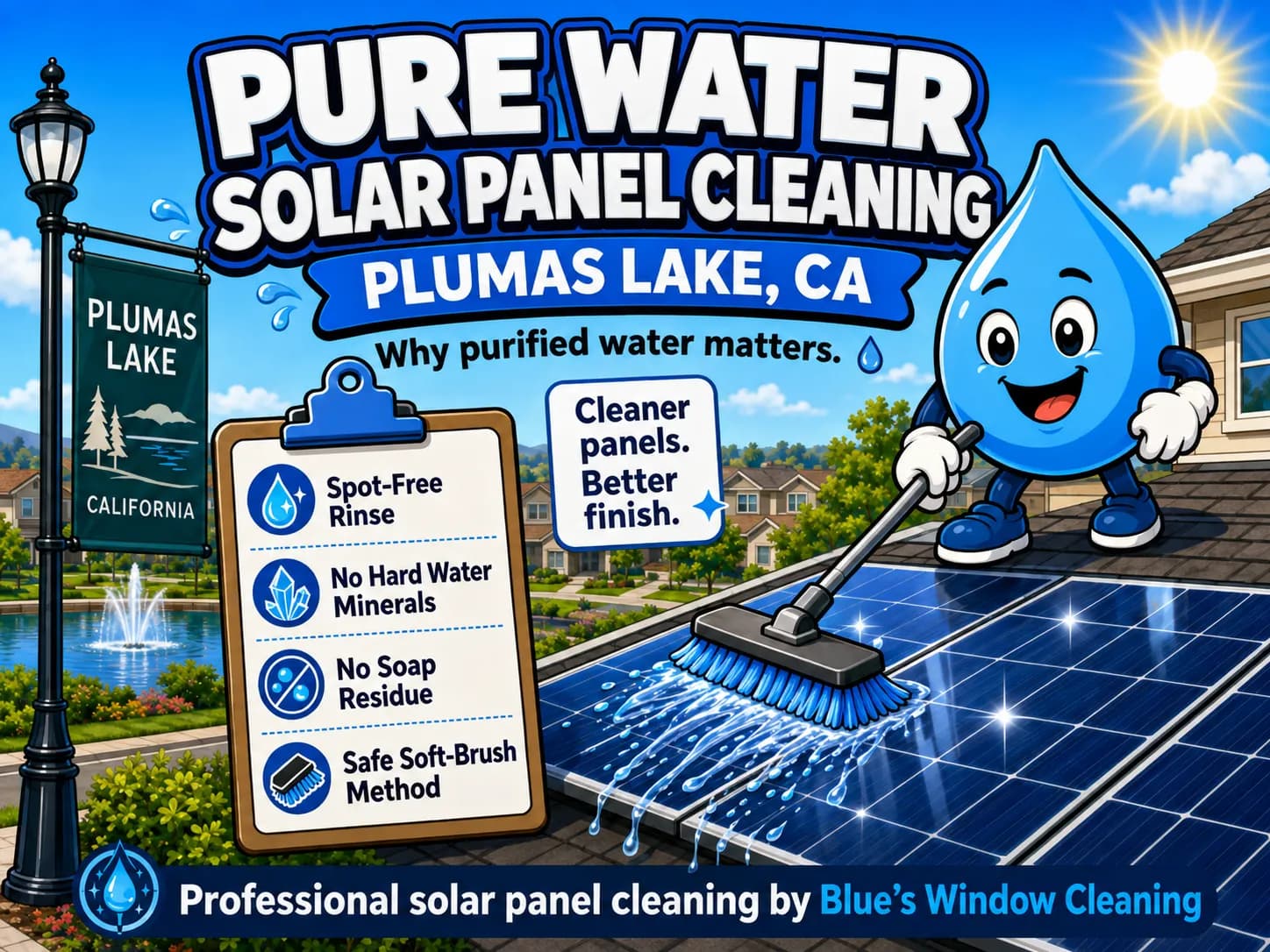
Solar panels are designed to spend years exposed to the elements, but that also means they collect dust, pollen, bird droppings, insects, and other outdoor debris.
When it comes time to clean them, the water you use matters.
At Blue’s Window Cleaning, we use a professional purified-water system for solar panel cleaning throughout Plumas Lake, California. Instead of simply spraying panels with ordinary tap water, our system removes most of the dissolved minerals and impurities from the water before it reaches the solar panels.
The result is a cleaner rinse with significantly less mineral residue left behind after the panels dry.
What Is Pure Water Cleaning?
Pure water cleaning starts with ordinary water and passes it through a filtration system designed to remove dissolved minerals and contaminants.
Depending on the system, this may involve stages such as:
Sediment filtration
Carbon filtration
Reverse osmosis
Deionization
The goal is to produce water with extremely low levels of dissolved solids.
For solar panel cleaning, this is important because the water can be used to rinse the panels without introducing the same mineral residue that ordinary hose water may leave behind.
What's Wrong With Regular Tap Water?
Tap water contains naturally occurring minerals.
Common minerals can include:
Calcium
Magnesium
Sodium
Silica
Other dissolved solids
These minerals are normally harmless for everyday household use.
The problem occurs when tap water is sprayed onto glass or solar panels and then allowed to dry.
The water evaporates, but the minerals do not.
Those minerals can remain on the surface as visible water spots or residue.
This is one reason simply spraying solar panels with a garden hose may not leave them looking completely clean.
Why Water Spots Matter on Solar Panels
Solar panels have a smooth glass surface that can make dried mineral deposits easy to see.
If ordinary tap water is repeatedly allowed to dry on the panels, mineral residue can gradually accumulate.
Using purified water helps avoid introducing unnecessary minerals during the cleaning process.
Instead of cleaning the panels and then leaving another layer of residue behind, we want the final rinse to leave the surface as clean as possible.
How Our Pure Water Solar Cleaning Process Works
Our solar panel cleaning process generally starts by evaluating the roof, panel layout, and access conditions.
Once the equipment is set up, we use purified water along with a soft, nonabrasive brush to clean the panel surface.
The process typically includes:
Rinsing loose dust and debris from the panels
Agitating the surface with a soft brush
Loosening pollen, dirt, and bird droppings
Rinsing the panels thoroughly with purified water
Allowing the remaining water to dry naturally
Because most of the dissolved minerals have been removed from the water, the panels can dry with much less mineral residue than they would with ordinary tap water.
Why We Still Use a Brush
Purified water is an important part of the process, but water alone does not remove every type of contamination.
Bird droppings, pollen, insects, and baked-on dirt often require physical agitation.
That is why we pair purified water with a soft-bristle cleaning brush.
The brush helps loosen contaminants while the purified water carries the dirt away.
The goal is effective cleaning without aggressively scrubbing or scratching the panel surface.
Why We Don't Rely on Soap
Many homeowners assume that more soap means a cleaner surface.
That isn't necessarily the case with solar panels.
Soap can leave a film if it is not rinsed thoroughly. That residue can attract additional dust or leave the panel looking streaky.
For routine cleaning, purified water and proper agitation are often enough to remove common outdoor buildup without relying heavily on detergents.
This also keeps the cleaning process simple and minimizes unnecessary residue on the panels.
Pure Water vs. Garden Hose Cleaning
A garden hose can certainly rinse loose dust from solar panels.
The difference is what happens afterward.
Garden Hose
Ordinary hose water contains dissolved minerals. When the water evaporates, those minerals can remain on the panel.
Purified Water
Purified water has had most of those dissolved solids removed, allowing it to dry with far less mineral residue.
A hose may be useful for rinsing loose debris, but professional purified-water cleaning is designed to provide a more complete result.
Why This Matters in Plumas Lake
Solar panels in Plumas Lake can experience significant outdoor buildup during long stretches of dry weather.
Common contaminants include:
Dust
Pollen
Bird droppings
Agricultural debris
Road dust
Insects
Construction dust
Smoke and ash residue
When panels are already covered with outdoor buildup, the last thing we want to do is clean them with mineral-heavy water and leave additional residue behind.
Purified water helps us remove existing contamination without adding unnecessary mineral deposits during the rinse.
Does Rain Count as Pure Water?
Not exactly.
Rain may help wash away some loose dust, but once rainwater travels through the atmosphere and across a dirty panel, it can carry contaminants with it.
Rain also does not provide the brushing action needed to loosen stuck-on debris.
After rainfall, homeowners may still notice:
Dust residue
Bird droppings
Pollen
Dirt along panel edges
Water spots
Uneven buildup
Rain can help, but it is not the same as a professional solar panel cleaning.
What Does TDS Mean?
When discussing purified water, you may hear the term TDS, which stands for total dissolved solids.
TDS is a measurement of the amount of dissolved material in water.
Ordinary tap water may contain a significant amount of dissolved minerals, while professional purification systems are designed to reduce that number dramatically.
The lower the dissolved mineral content, the less mineral material is available to remain behind after the water evaporates.
Why We Don't Pressure Wash Solar Panels
Pure water does not mean high-pressure water.
Solar panels should not be cleaned like concrete or a driveway.
We do not rely on aggressive pressure washing because excessive pressure can create unnecessary risk around:
Seals
Wiring
Mounting components
Roof penetrations
Electrical connections
Instead, we use controlled water flow, soft-brush agitation, and purified water.
The goal is to safely clean the panel surface rather than blast contamination away.
Bird Droppings Require More Than Water
Bird droppings are one of the most stubborn contaminants found on residential solar panels.
During hot Plumas Lake weather, they can dry and harden onto the glass.
Simply spraying them with water may not be enough.
Our soft-brush cleaning process helps loosen the material while purified water rinses it away.
This allows us to clean the panels without resorting to aggressive scraping.
Can Hard Water Build Up on Solar Panels?
Yes.
Repeated exposure to mineral-containing water can leave deposits behind.
This can happen when:
A homeowner frequently hoses off the panels
Sprinklers reach low-mounted panels
Water is allowed to repeatedly dry on the glass
Over time, mineral deposits may become harder to remove.
Using purified water for professional cleaning helps reduce the amount of new mineral residue introduced during the service.
Does Pure Water Make Solar Panels Produce More Electricity?
Pure water itself does not increase solar production.
Its purpose is to help us clean the panels without leaving unnecessary mineral residue behind.
Cleaning removes surface contaminants such as dust, pollen, and bird droppings that may block some sunlight from reaching the panel surface.
The actual change in solar output after cleaning can vary depending on:
How dirty the panels were
Panel angle
System design
Weather
Shade
Time of year
Type of contamination
We do not promise a specific increase in production.
The goal is simply to restore a cleaner, unobstructed panel surface.
Pure Water Is Also Used for Professional Window Cleaning
The same basic technology is widely used in professional exterior window cleaning.
Glass and solar panels have something important in common: mineral residue becomes highly visible when water dries on their surface.
That is why purified-water systems are so useful for both services.
Blue’s Window Cleaning uses professional water purification equipment for exterior cleaning so we can rinse surfaces without relying on ordinary mineral-containing tap water.
Can Solar Panel Cleaning Be Combined With Window Cleaning?
Yes.
Solar panel cleaning and exterior window cleaning are a natural combination because both can benefit from purified-water cleaning.
Plumas Lake homeowners can schedule both services during the same visit, allowing us to use the purification equipment for multiple exterior surfaces.
This can be a convenient way to refresh the home's windows and solar panels at the same time.
How Often Should Solar Panels Be Cleaned?
Many Plumas Lake homeowners may benefit from professional solar panel cleaning once or twice per year.
However, your ideal schedule depends on your property.
More frequent cleaning may make sense if you have:
Heavy bird activity
Nearby trees
Construction nearby
Significant dust exposure
Agricultural activity
Visible pollen buildup
Panels that become dirty quickly
The best indicator is usually the actual condition of the panels.
Signs Your Solar Panels May Be Ready for Cleaning
Consider scheduling service if you notice:
A visible layer of dust
Bird droppings
Pollen buildup
Dirt collecting around panel edges
Panels that look dull
Months of dry weather without cleaning
Construction dust in the neighborhood
Smoke or ash residue
You can usually inspect the panels from the ground without climbing onto the roof.
Why Choose Blue’s Window Cleaning?
Blue’s Window Cleaning provides professional solar panel cleaning throughout Plumas Lake and the surrounding Yuba-Sutter area.
Our solar cleaning process focuses on:
Purified-water cleaning
Soft, nonabrasive brushes
Controlled water flow
No aggressive pressure washing
Removal of dust and pollen
Removal of bird droppings and outdoor buildup
First and second-story solar systems
Professional exterior cleaning equipment
Our goal is to leave your solar panels clean without introducing unnecessary soap or mineral residue during the process.
Professional Pure Water Solar Panel Cleaning in Plumas Lake
If your solar panels are covered in dust, pollen, bird droppings, or general outdoor buildup, simply spraying them with tap water may not provide the result you're looking for.
Professional purified-water cleaning combines proper agitation with a low-mineral final rinse to leave the panels cleaner and reduce the mineral spotting associated with ordinary tap water.
Contact Blue’s Window Cleaning today to request an estimate for professional solar panel cleaning in Plumas Lake, California.